
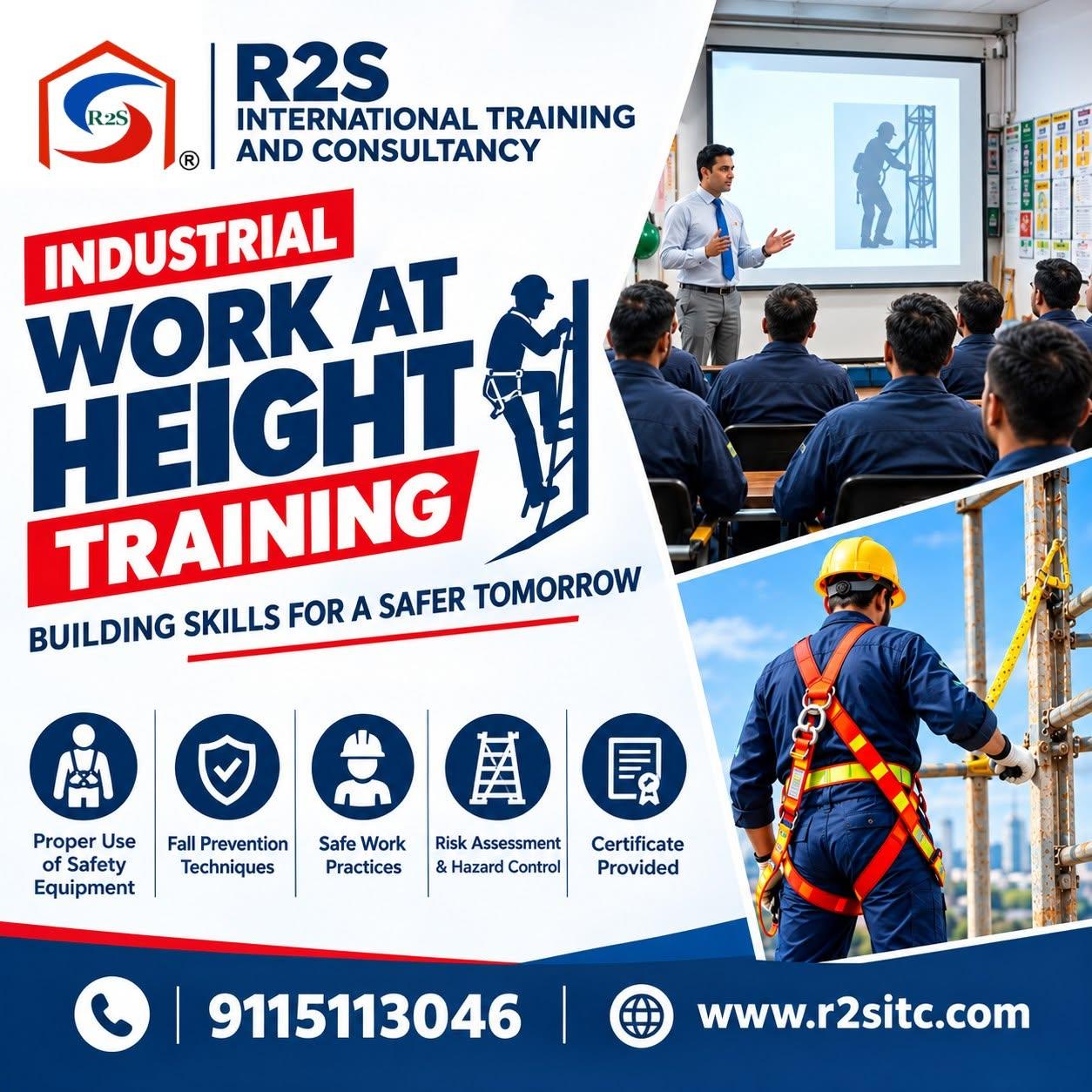
Working at height is common in construction, industrial maintenance, manufacturing, warehousing, and infrastructure projects. Whether employees are working on scaffolds, ladders, rooftops, elevated platforms, or other raised work areas, understanding the risks is essential for preventing accidents.
A Work at Height Training Course helps workers and supervisors understand fall hazards, appropriate protective equipment, safe access methods, and procedures for working at elevated locations.
For workers, job seekers, and safety professionals in Punjab, developing work-at-height safety knowledge can be an important step toward safer workplace practices.
What Is Work at Height Training?
Work at Height Training teaches participants how to recognize and control hazards associated with tasks performed at elevated locations where a fall could cause injury.
The course generally focuses on:
-
Identifying fall hazards
-
Understanding fall prevention measures
-
Safe use of ladders and scaffolds
-
Working platform safety
-
Personal protective equipment (PPE)
-
Safety harness awareness
-
Fall protection systems
-
Workplace risk assessment
-
Emergency procedures and rescue awareness
The exact training content depends on the work environment, equipment, applicable regulations, and the responsibilities of the participants.
Why Is Work at Height Training Important?
Falls from height can cause serious injuries and fatalities. Common causes include unsafe access, unprotected edges, unstable working platforms, incorrect equipment use, and inadequate planning.
Proper training helps workers recognize hazards before beginning a task and understand how to follow safer work procedures.
Work-at-height training can help organizations:
-
Improve hazard identification
-
Strengthen fall prevention practices
-
Encourage correct PPE use
-
Improve awareness of ladders and scaffolds
-
Support compliance with applicable safety requirements
-
Prepare workers to respond appropriately to emergencies
Training should be combined with suitable equipment, competent supervision, and a site-specific risk assessment.
Key Topics Covered in a Work at Height Training Course
1. Hazard Identification and Risk Assessment
Before starting work at height, workers should understand the hazards present in the work area.
Training may cover how to identify:
-
Unprotected edges and openings
-
Fragile roof surfaces
-
Unsafe ladders
-
Incomplete scaffolding
-
Slippery or uneven surfaces
-
Falling-object hazards
-
Nearby electrical hazards
-
Weather conditions affecting safe work
Participants learn why hazards should be assessed and appropriate control measures implemented before work begins.
2. Fall Prevention and Protection
Preventing a fall is generally preferable to relying only on equipment designed to arrest one.
Training can introduce the hierarchy of controls, including avoiding work at height where possible, using suitable working platforms or collective protection, and selecting appropriate personal fall protection when necessary.
Important topics include guardrails, edge protection, safety nets, personal fall arrest systems, and safe working procedures.
3. Safety Harnesses and PPE
Personal protective equipment must be suitable for the task and used correctly.
Participants may learn about:
-
Full-body safety harnesses
-
Lanyards and connectors
-
Suitable anchorage points
-
Inspection of fall protection equipment
-
Correct fitting and adjustment
-
Equipment limitations
-
Storage and maintenance
A harness alone does not guarantee safety. The complete system must be appropriate for the task, and workers need to understand clearance requirements and the risk of suspension after a fall.
4. Ladder Safety
Ladders are commonly used for access and certain short-duration tasks. Incorrect positioning or use can create a fall hazard.
Training may cover:
-
Selecting the appropriate ladder
-
Checking for visible damage
-
Setting up ladders securely
-
Maintaining safe access
-
Avoiding overreaching
-
Keeping access areas clear
-
Recognizing when another working platform is more appropriate
Ladders should be used according to their intended purpose and applicable safety procedures.
5. Scaffold and Working Platform Safety
Scaffolds and elevated working platforms are widely used in construction and maintenance activities.
Important safety considerations include:
-
Safe access and egress
-
Stable platforms
-
Guardrails and toe boards where required
-
Scaffold inspection
-
Load limitations
-
Housekeeping
-
Prevention of falling materials
-
Avoiding unauthorized modifications
Workers should not use incomplete or unsafe scaffolding.
6. Emergency Preparedness and Rescue Awareness
Emergency planning is an important part of work-at-height safety.
Training can introduce emergency communication, reporting procedures, and awareness of rescue arrangements. Where personal fall arrest systems are used, a suitable rescue plan is essential because a suspended worker may require prompt assistance.
Workers should know how to raise an alarm and follow the site’s established emergency procedures.
Who Should Join Work at Height Training?
A Work at Height Training Course may be useful for:
-
Construction workers
-
Industrial maintenance workers
-
Scaffolders
-
Electrical and installation workers
-
Rooftop maintenance personnel
-
Site supervisors
-
Safety officers
-
HSE professionals
-
Infrastructure workers
-
Students and job seekers entering industrial occupations
The appropriate course level depends on the participant’s work responsibilities and experience.
Benefits of Work at Height Safety Training
Proper training can help participants develop practical safety awareness and understand how to approach elevated work more responsibly.
Key benefits include:
Better hazard awareness: Recognizing fall risks before beginning a task.
Improved equipment knowledge: Understanding the purpose and limitations of harnesses, ladders, scaffolds, and other equipment.
Safer working practices: Following approved procedures for access, movement, and work positioning.
Emergency awareness: Understanding reporting and rescue arrangements.
Career development: Building relevant safety knowledge for roles in construction, maintenance, and industrial environments.
Completing a course does not automatically authorize someone to perform every type of work-at-height activity. Some tasks require additional competency assessment, specialized training, or site-specific authorization.
Work at Height Training in Punjab
If you are looking for Work at Height Training in Punjab, it is important to choose a program that covers practical workplace hazards alongside theoretical safety principles.
R2S International Training & Consultancy (R2SITC), Hoshiarpur, provides safety-focused training opportunities for individuals interested in industrial and workplace safety.
Before enrolling, ask about the course syllabus, practical training arrangements, assessment methods, duration, and certificate details so you can choose a program suitable for your requirements.
Frequently Asked Questions (FAQs)
What is the purpose of work-at-height training?
The purpose is to help workers recognize fall hazards, understand protective equipment, and follow safe procedures when working at elevated locations.
Who needs work-at-height training?
Construction workers, scaffolders, maintenance personnel, supervisors, and others whose responsibilities involve working at height may benefit from relevant training.
Does work-at-height training cover safety harnesses?
Many courses introduce harnesses, connectors, anchorage, inspection, and fall protection systems. The exact syllabus should be confirmed with the training provider.
Is practical training important?
Yes. Practical demonstrations and appropriate hands-on exercises can help participants understand equipment, safe access, and workplace procedures more effectively.
Where can I enquire about Work at Height Training in Hoshiarpur?
You can contact R2SITC to enquire about available training options, course details, and certification requirements.
Conclusion
Working at height requires proper planning, suitable equipment, hazard awareness, and safe working procedures. A structured Work at Height Training Course can help workers and supervisors understand fall prevention, PPE, ladder and scaffold safety, and emergency preparedness.
If you want to develop your workplace safety knowledge in Punjab, contact R2SITC Hoshiarpur to learn more about available training options.
R2S International Training & Consultancy (R2SITC)
-
Location: Hoshiarpur, Punjab
-
Phone: +91-8146862446
-
Website: r2sitc.com