
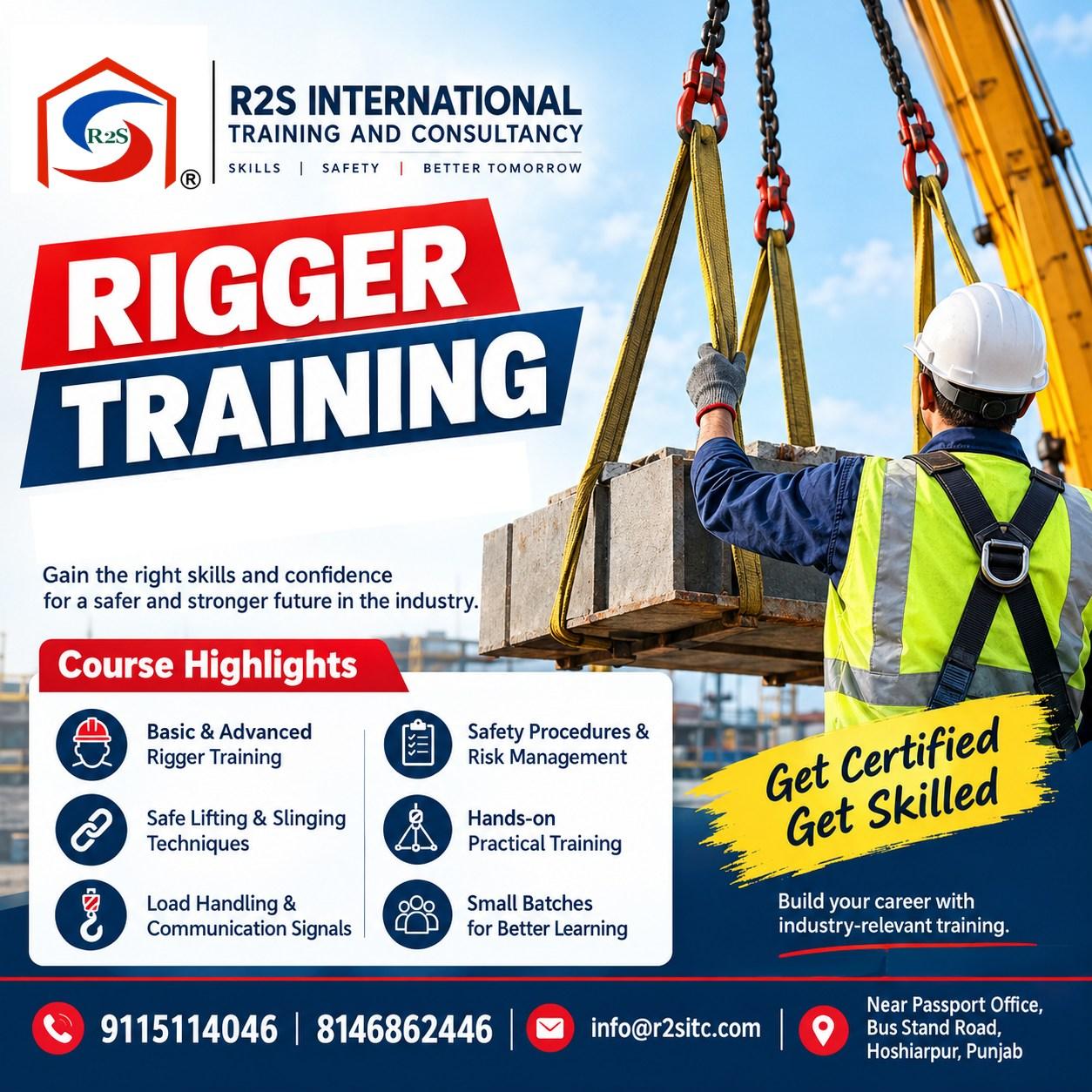
Moving heavy equipment and materials is a critical part of construction, manufacturing, infrastructure, oil and gas, warehousing, and industrial operations. Behind many successful lifting operations is a trained rigger who understands how loads should be prepared, connected, guided, and moved safely.
Rigger Training helps participants develop the knowledge and practical skills needed to work safely around lifting and material-handling operations. It focuses on equipment selection, load assessment, communication, hazard identification, and safe rigging practices.
What Is Rigger Training?
Rigger Training is designed to teach workers the fundamentals of preparing and handling loads for lifting operations.
A rigger may work with equipment such as:
- Wire ropes
- Web slings
- Shackles
- Hooks
- Eye bolts
- Chain slings
- Lifting beams
- Other approved lifting accessories
The exact equipment and procedures depend on the lifting operation, workplace requirements, equipment specifications, and applicable safety regulations.
Why Is Rigger Training Important?
Lifting operations can involve significant risks if loads are incorrectly attached, unbalanced, overloaded, or moved without proper communication.
A trained rigger can help identify potential hazards before lifting begins and support a more controlled lifting operation.
Important areas of rigger safety include:
- Load weight and dimensions
- Centre of gravity
- Sling selection
- Sling angles
- Working load limits
- Condition of lifting accessories
- Load stability
- Communication with operators
- Exclusion zones
- Weather and surrounding hazards
Training helps workers understand why each of these factors matters.
Key Skills Covered in Rigger Training
1. Understanding Lifting Equipment
Participants learn about common rigging equipment and its applications.
This can include understanding the purpose and limitations of:
- Slings
- Shackles
- Hooks
- Wire ropes
- Chains
- Lifting accessories
- Tag lines
Knowing the correct application of equipment is an important part of safe lifting.
2. Load Assessment
Before a load is lifted, workers need to understand its characteristics.
Training may cover:
- Estimating or verifying load weight
- Identifying the centre of gravity
- Checking load dimensions
- Identifying lifting points
- Assessing load stability
- Selecting appropriate lifting accessories
A suitable lifting plan and manufacturer’s information should be followed whenever required.
3. Sling Selection and Safe Use
Choosing the appropriate sling is an important rigging responsibility.
Participants can learn about factors such as:
- Sling type
- Rated capacity
- Sling angle
- Load configuration
- Connection method
- Condition of the sling
Lifting accessories should be inspected before use and removed from service when damaged or otherwise unsuitable.
4. Rigging and Connecting Loads
Rigger training can introduce different methods of connecting and securing loads according to the specific lifting equipment and load.
The objective is to achieve a stable connection while avoiding damage to the load or lifting accessories.
Workers should always follow approved procedures and the rated capacity of the equipment.
5. Communication and Signalling
Clear communication between the rigger and lifting equipment operator is essential.
Training can cover:
- Standard hand signals
- Radio communication
- Communication before lifting
- Coordination during movement
- Stop signals
- Maintaining clear communication when visibility is limited
A clear signal or stop instruction can help prevent misunderstandings during lifting operations.
Common Hazards in Rigging Operations
Riggers may encounter several hazards during lifting activities.
Overloading
Using equipment beyond its rated capacity can create a serious lifting hazard. Workers need to understand working load limits and ensure equipment is suitable for the intended operation.
Damaged Lifting Accessories
Cuts, broken wires, deformation, excessive wear, corrosion, or other damage can affect lifting accessories. Inspection is therefore an important part of rigging safety.
Unbalanced Loads
An incorrectly positioned lifting point or misunderstood centre of gravity can cause a load to tilt or shift unexpectedly.
Suspended Loads
Workers should never position themselves unnecessarily beneath suspended loads. Appropriate exclusion zones and site procedures should be followed.
Poor Communication
Miscommunication between the rigger and operator can result in unexpected movement. Agreed signals and communication procedures are essential.
Environmental Conditions
Wind, poor visibility, uneven surfaces, restricted spaces, and nearby structures can affect lifting operations and should be considered during planning.
Who Can Benefit From Rigger Training?
Rigger Training can be useful for:
- Riggers
- Construction workers
- Crane and lifting crews
- Site supervisors
- Safety officers
- HSE professionals
- Industrial workers
- Maintenance personnel
- Warehouse and material-handling workers
- Students and job seekers interested in industrial safety
Benefits of Rigger Training
Proper training can help participants:
- Understand basic rigging principles
- Identify lifting hazards
- Select appropriate lifting accessories
- Understand load stability and centre of gravity
- Improve communication during lifting
- Recognize damaged equipment
- Follow safer lifting procedures
- Develop stronger workplace safety awareness
Training should complement competent supervision, site-specific risk assessments, lifting plans, equipment manufacturer’s instructions, and applicable regulations.
Rigger Training and Career Opportunities
Riggers can be involved in lifting and material-handling activities across various industries, including:
- Construction
- Manufacturing
- Infrastructure
- Oil and gas
- Power projects
- Industrial maintenance
- Warehousing
- Shipyards
- Engineering projects
The skills developed through relevant training can provide a foundation for workers seeking roles involving lifting and rigging operations.
Why Choose Proper Rigger Training?
A good training program should go beyond simply explaining the names of lifting accessories. Participants should understand how to assess a lifting situation, recognize hazards, inspect equipment, communicate effectively, and follow safe procedures.
For individuals in Punjab looking to develop industrial safety and rigging knowledge, R2S International Training & Consultancy (R2SITC) offers safety-focused training in Hoshiarpur.
Conclusion
Riggers play an important role in safe lifting operations. From selecting suitable lifting accessories to understanding load stability and communicating with operators, every step can influence the safety of a lifting operation.
Rigger Training — Build Skills That Move the Industry is about developing practical safety knowledge that workers can apply when dealing with lifting and material-handling activities.
If you are looking for Rigger Training in Punjab, R2SITC Hoshiarpur can be considered for developing your industrial safety and rigging skills.
📍 R2SITC – Hoshiarpur, Punjab
📞 +91-8146862446
🌐 r2sitc.com