
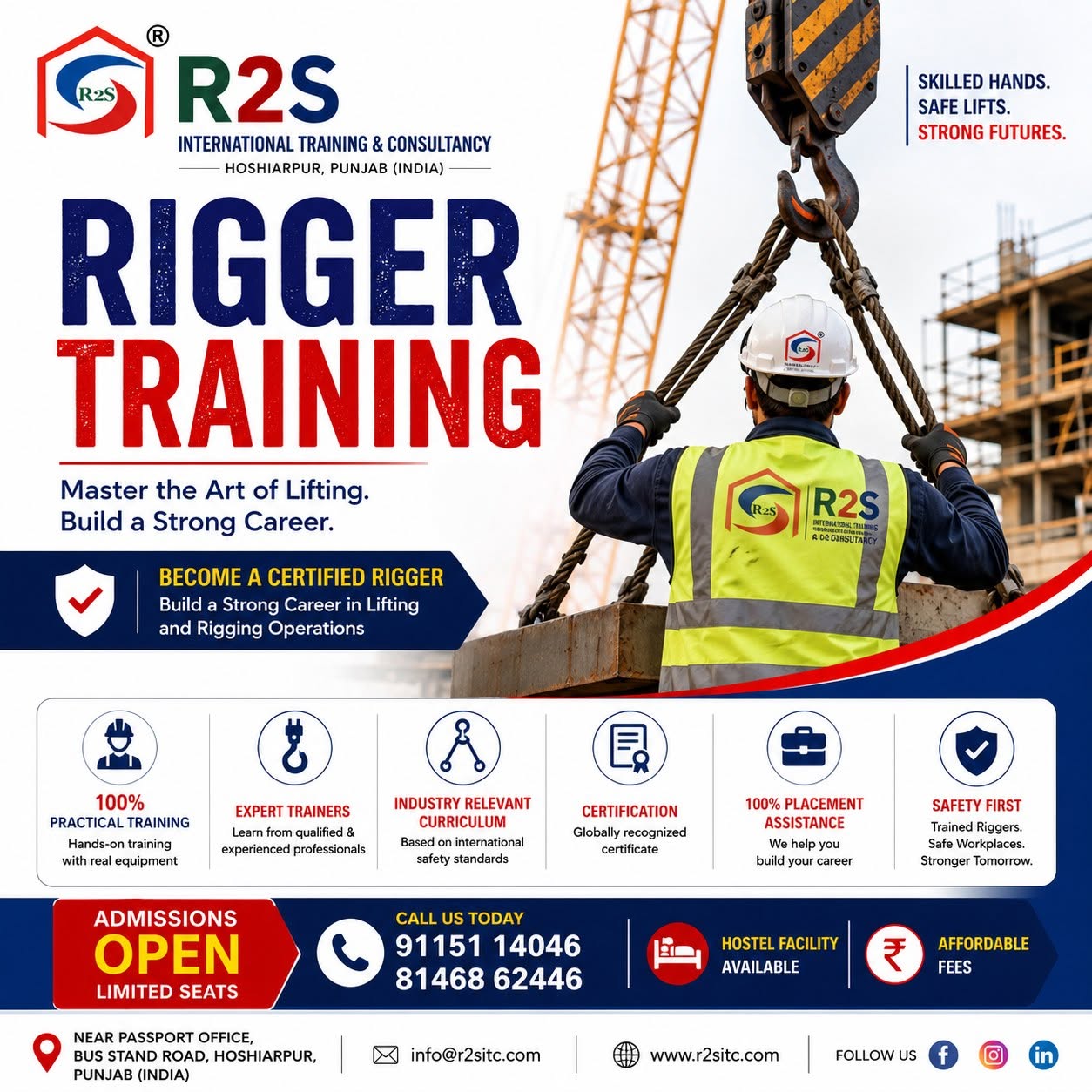
Rigger training is an important part of industrial safety, especially in industries where cranes, lifting equipment, heavy machinery, and large loads are regularly used. Incorrect rigging or lifting practices can lead to dropped loads, equipment damage, serious injuries, and workplace accidents.
A professional Rigger Training Course helps workers understand safe lifting practices, rigging equipment, load handling, communication, and workplace safety procedures.
At Road to Safety International Training Center, students and workers can develop practical knowledge and safety awareness required for rigging and lifting operations.
What is a Rigger Training Course?
A Rigger Training Course is designed to teach participants how to safely prepare, attach, guide, move, and release loads using appropriate lifting and rigging equipment.
Rigging personnel commonly work around:
- Cranes
- Hoists
- Slings
- Shackles
- Hooks
- Lifting accessories
- Heavy machinery
- Industrial materials
The objective is to ensure that loads are handled safely and that lifting operations are properly planned and controlled.
Why Rigger Training is Important
Lifting operations involve significant risks. A trained rigger needs to understand the equipment being used, the load characteristics, potential hazards, and safe working procedures.
Proper training can help workers:
- Identify lifting hazards
- Select appropriate rigging accessories
- Inspect equipment before use
- Understand load stability
- Communicate effectively with crane operators
- Follow safe lifting procedures
- Reduce the risk of dropped loads and accidents
Safety should always be the first priority during lifting operations.
What Do You Learn in Rigger Training?
A comprehensive rigger course can cover several important areas.
1. Rigging Equipment Identification
Participants learn about commonly used lifting accessories such as:
- Wire rope slings
- Web slings
- Chain slings
- Shackles
- Hooks
- Eye bolts
- Lifting clamps
Understanding the purpose and limitations of each item is essential for safe operations.
2. Sling Inspection
Before a lifting operation, rigging equipment should be inspected for visible damage and other defects.
Training may cover how to identify:
- Cuts
- Abrasion
- Deformation
- Broken wires
- Corrosion
- Damaged fittings
- Improper identification or markings
Damaged equipment should not be used.
3. Load Handling and Stability
A rigger must understand how loads behave during lifting.
Important concepts include:
- Load weight
- Centre of gravity
- Load balance
- Sling angles
- Load distribution
- Safe lifting points
Understanding these principles helps prevent unstable or uncontrolled loads.
Slinging and Signalling Techniques
Communication is extremely important during crane and lifting operations.
Rigger training may include standard hand signals and communication procedures used between:
Rigger → Banksman/Signalman → Crane Operator
Clear communication helps coordinate lifting, lowering, stopping, and positioning of loads.
Safe Lifting Practices
A professional rigger should understand the importance of planning before starting a lifting operation.
A basic safety approach includes:
- Assess the work area.
- Identify potential hazards.
- Determine the load characteristics.
- Select suitable lifting accessories.
- Inspect all equipment.
- Establish a safe lifting zone.
- Confirm communication signals.
- Conduct the lift under appropriate supervision.
Never stand beneath a suspended load or enter a restricted lifting area without authorization.
Practical Rigger Training
Theory alone is not enough for a job involving lifting operations. Practical training allows participants to understand how rigging equipment is actually used.
Practical sessions may include:
- Sling selection
- Shackle connection
- Load attachment
- Lifting accessory inspection
- Basic signalling
- Load positioning
- Safe lifting demonstrations
- Workplace hazard identification
Hands-on learning can improve confidence and safety awareness.
Who Should Join a Rigger Training Course?
Rigger training can be useful for:
- Beginners entering the industrial sector
- Construction workers
- Crane and lifting personnel
- Warehouse workers
- Heavy equipment workers
- Industrial employees
- Supervisors involved in lifting operations
- Job seekers interested in rigging careers
The exact eligibility requirements may depend on the training program and employer.
Career Opportunities After Rigger Training
Riggers can find opportunities in industries where heavy materials and equipment need to be lifted or positioned.
Potential sectors include:
- Construction
- Manufacturing
- Warehousing
- Infrastructure
- Power plants
- Shipyards
- Oil and gas
- Heavy engineering
- Logistics
Depending on experience, qualifications, and employer requirements, career roles may include Rigger, Lifting Assistant, Banksman/Signalman, Rigging Helper, or Lifting Operations Personnel.
Skills Employers Look For
Employers generally value riggers who demonstrate:
- Strong safety awareness
- Good communication
- Equipment inspection skills
- Understanding of lifting procedures
- Ability to follow instructions
- Teamwork
- Physical awareness around lifting operations
- Commitment to safe working practices
Professional training can help candidates build these foundational skills.
Why Choose Professional Rigger Training?
When selecting a training institute, students should look for a program that provides:
✅ Experienced instructors
✅ Practical demonstrations
✅ Safety-focused curriculum
✅ Proper rigging equipment
✅ Hands-on learning
✅ Workplace hazard awareness
✅ Course completion certification
A practical approach helps students understand how classroom concepts apply to real industrial environments.
Start Your Career in Rigging and Lifting Operations
Rigger work carries significant responsibility because every lifting operation requires careful planning, appropriate equipment, and effective communication.
A professional Rigger Training Course in Punjab can help students and workers develop essential knowledge about rigging equipment, safe lifting practices, load handling, signalling, and workplace safety.
If you’re planning a career in construction, manufacturing, logistics, infrastructure, or heavy industry, gaining proper rigging training can be an important step toward becoming a more skilled and safety-conscious worker.
📍 Rigger Training in Hoshiarpur, Punjab
Road to Safety International Training Center
📍 Hoshiarpur, Punjab
📞 +91-8146862446
📧 [email protected]