
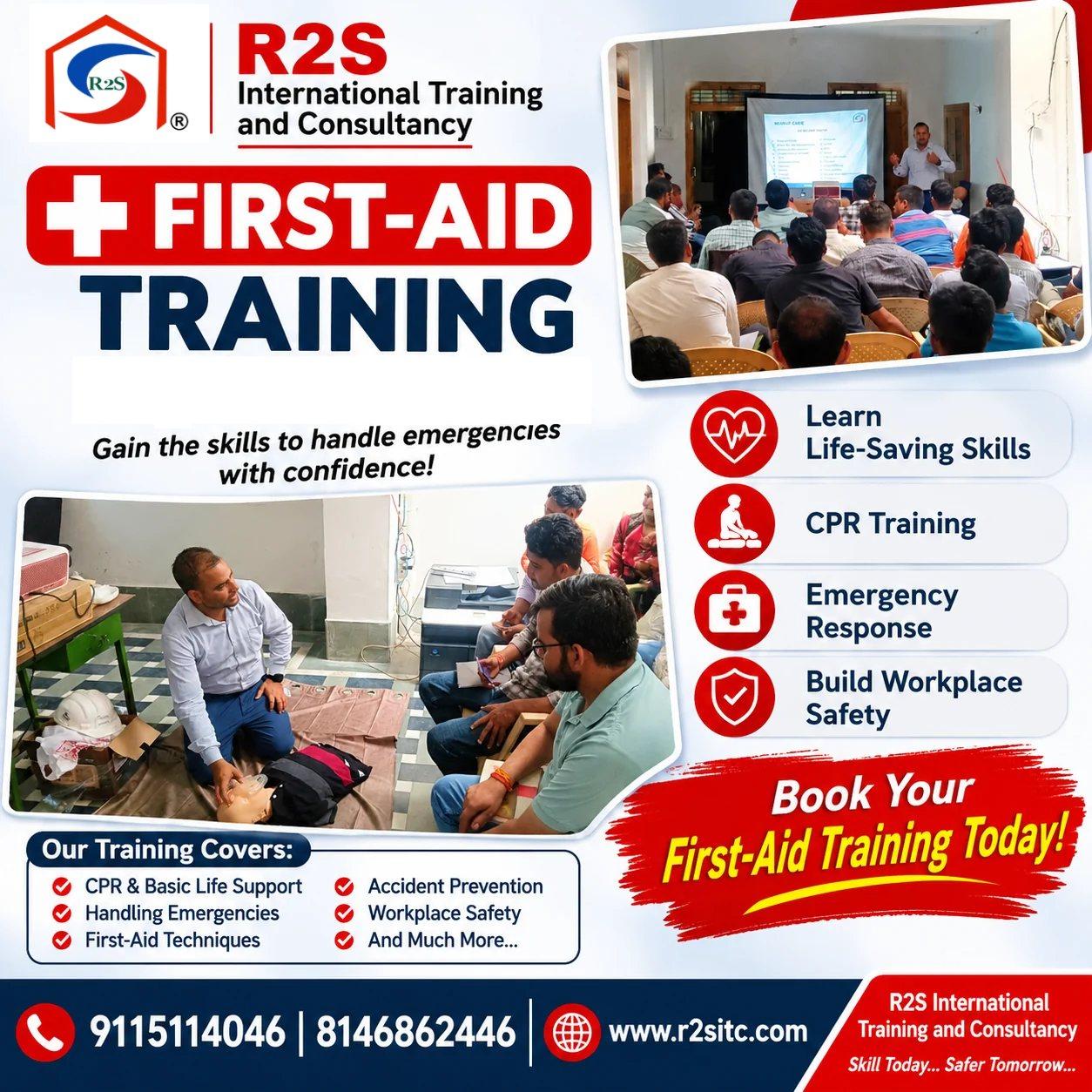
Emergencies can happen anywhere — at workplaces, construction sites, factories, educational institutions, public spaces or even at home. A sudden injury, burn, fall, breathing difficulty or medical emergency can require immediate attention before professional medical help arrives.
In these situations, knowing how to respond calmly and appropriately can make an important difference.
First Aid Training helps individuals develop the knowledge and practical awareness needed to recognize emergencies, provide initial assistance and seek appropriate medical support. It also encourages safer environments by preparing people to respond instead of panicking when an unexpected incident occurs.
For employees, supervisors, safety professionals and individuals, First Aid Training in Punjab can be a valuable step towards building emergency preparedness.
What Is First Aid?
First aid refers to the immediate assistance provided to someone who is injured or suddenly becomes ill before professional medical treatment is available.
The main objectives of first aid are to:
Preserve life.
Prevent a condition or injury from becoming worse.
Promote recovery.
Arrange appropriate medical assistance.
Keep the affected person and surrounding people safe.
First aid is not a replacement for professional medical treatment. It is an initial response intended to support the affected person until qualified medical help takes over.
Why Is First Aid Training Important?
Many emergencies require quick decisions. Without basic knowledge, people may panic, delay assistance or take actions that unintentionally increase the risk.
Structured training helps participants understand what to do, what to avoid and when to seek emergency services.
1. Responding Quickly to Emergencies
A trained person may be better prepared to recognize an emergency, assess immediate dangers and arrange appropriate assistance.
For example, if someone collapses at a workplace, knowing how to activate emergency services and follow appropriate response procedures can be extremely important.
2. Managing Common Workplace Injuries
Factories, construction sites, warehouses and industrial workplaces may involve hazards such as cuts, burns, falls and equipment-related injuries.
First aid awareness helps employees understand the importance of immediate care, safe handling and timely medical referral.
3. Understanding CPR and Emergency Response
Cardiopulmonary resuscitation (CPR) is an important emergency response skill used when a person is unresponsive and not breathing normally.
Training can introduce participants to CPR principles, emergency communication and the use of an automated external defibrillator (AED), where available.
4. Building Confidence and Awareness
Learning how to respond to emergencies can help reduce confusion and encourage responsible action.
It also helps employees understand their role in workplace emergency preparedness.
Essential First Aid Skills Everyone Should Understand
A structured First Aid Training Course may introduce participants to several important emergency response topics.
1. Basic Emergency Assessment
Before helping an injured person, responders should check whether the surrounding area is safe.
Important considerations include:
Identifying immediate dangers.
Checking the person’s responsiveness.
Recognizing whether normal breathing is present.
Calling emergency services when required.
Following the instructions of emergency professionals.
Never put yourself or others at additional risk while attempting to provide assistance.
2. CPR Awareness and Basic Life Support
CPR is used in certain life-threatening situations involving cardiac arrest.
Training may cover:
Recognizing cardiac arrest.
Activating emergency medical services.
Understanding chest compression principles.
Learning how an AED is used.
Following current recognized CPR guidelines.
Practical CPR exercises should be conducted under suitable supervision using training manikins.
3. First Aid for Bleeding and Cuts
Cuts and bleeding injuries can occur in workplaces and everyday situations.
Basic first aid education may cover:
Recognizing the severity of bleeding.
Applying appropriate direct pressure.
Using suitable protective equipment.
Avoiding unnecessary contact with blood.
Seeking urgent medical assistance for serious injuries.
Severe bleeding requires immediate emergency medical attention.
4. Burns and Scalds
Burns can result from hot surfaces, steam, chemicals, electrical sources or fire-related incidents.
Training helps participants understand how to respond safely, including cooling suitable thermal burns with cool running water and arranging medical care when needed.
Do not apply ice, butter, toothpaste or other household substances to burns. Chemical and electrical burns require appropriate urgent medical assessment.
5. Fractures and Sprains
Falls, accidents and physical injuries can result in suspected fractures or sprains.
First aid awareness includes understanding the importance of:
Avoiding unnecessary movement.
Supporting the injured area where appropriate.
Not attempting to straighten a suspected fracture.
Monitoring the person’s condition.
Arranging medical evaluation.
6. Choking Emergencies
Choking occurs when an object blocks the airway and interferes with breathing.
Training may explain how to recognize mild and severe choking, when to encourage coughing, and how to respond using age-appropriate techniques according to current first aid guidance.
Emergency services should be contacted when the situation is serious.
7. Fainting and Sudden Illness
People may experience fainting, dizziness, breathing difficulties or other sudden medical problems.
Participants should learn to recognize warning signs, maintain safety, monitor the affected person and seek medical help when necessary.
First Aid in Industrial and Construction Workplaces
First aid preparedness is especially important in industrial environments because workers may be exposed to different occupational hazards.
Some examples include:
| Workplace | Possible emergency situations |
|---|---|
| Construction sites | Falls, cuts, fractures and impact injuries |
| Factories | Machinery-related injuries, burns and bleeding |
| Warehouses | Slips, trips, falls and material-handling injuries |
| Electrical workplaces | Electrical injuries and burns |
| Workshops | Cuts, eye injuries and equipment-related incidents |
| Offices | Sudden illness, fainting and other medical emergencies |
Employers should establish appropriate first aid arrangements based on workplace risks, applicable regulations, the number of employees and the nature of work.
This may include suitable first aid supplies, trained personnel, emergency contacts and clear reporting procedures.
What Can You Learn in a First Aid Training Course?
A structured course may include the following subjects:
| Training topic | Learning objective |
|---|---|
| First aid fundamentals | Understanding the purpose and limitations of first aid |
| Emergency assessment | Recognizing danger and assessing the situation |
| CPR awareness | Understanding basic life support principles |
| AED awareness | Learning the purpose and basic use of an AED |
| Bleeding management | Understanding initial care for bleeding injuries |
| Burns management | Learning appropriate first response principles |
| Fractures and sprains | Understanding safe support and medical referral |
| Choking response | Recognizing airway emergencies |
| Emergency communication | Knowing when and how to request professional help |
| Workplace first aid | Understanding emergency preparedness at work |
The exact syllabus, practical sessions and assessment requirements should be confirmed with the training provider.
Who Should Consider First Aid Training?
First aid knowledge can be useful for people across different professions and age groups.
The course may be relevant to:
Construction workers and supervisors.
Factory and industrial employees.
Safety officers and HSE professionals.
Warehouse and logistics workers.
Teachers and educational staff.
Security personnel.
Office employees.
Facility management teams.
Individuals interested in emergency preparedness.
Employers may also consider suitable first aid training for employees as part of their workplace safety and emergency preparedness arrangements.
How to Choose a First Aid Training Institute in Punjab
Choosing a suitable training provider is important because first aid involves practical knowledge and responsible emergency response.
Before enrolling, consider these points:
Course syllabus: Check whether CPR awareness, bleeding management, burns, choking and emergency assessment are included.
Practical learning: Ask whether supervised demonstrations and practical exercises are provided.
Trainer experience: Understand the trainer’s relevant qualifications and experience.
Training equipment: Ask about CPR manikins, first aid kits and other learning resources.
Assessment: Confirm how participants’ knowledge and practical skills are evaluated.
Certification: Ask about the certificate, issuing authority, recognition and validity, if applicable.
A training certificate should accurately reflect the course completed. Participants should not assume that every basic first aid course provides professional medical qualifications or authorization.
First Aid Training at R2SITC Hoshiarpur, Punjab
R2S International Training & Consultancy (R2SITC), based in Hoshiarpur, Punjab, provides training opportunities in workplace and industrial safety.
First aid education is an important part of developing a safety-conscious approach in workplaces where employees may need to respond to unexpected injuries or medical emergencies.
Individuals interested in First Aid Training can contact R2SITC to enquire about the available course structure, practical learning arrangements, duration, assessment and certification details.
Whether you are an industrial worker, aspiring safety professional, supervisor or individual interested in emergency preparedness, learning first aid can help you develop valuable safety awareness.
Enquire About First Aid Training in Punjab
R2S International Training & Consultancy (R2SITC)
Location: Hoshiarpur, Punjab, India
Phone: +91-8146862446
Email: [email protected]
Website: https://www.r2sitc.com/
Contact R2SITC to learn more about available first aid and workplace safety training options.
Frequently Asked Questions (FAQs)
1. What is the main purpose of First Aid Training?
The main purpose is to help individuals recognize emergencies, provide appropriate initial assistance, prevent further harm and arrange professional medical support.
2. Is CPR included in First Aid Training?
Many first aid programs include CPR awareness or practical CPR training. However, the exact content depends on the course syllabus and should be confirmed before enrolment.
3. Who should learn first aid?
Construction workers, industrial employees, safety officers, teachers, supervisors, office staff and individuals interested in emergency preparedness can benefit from first aid education.
4. Why is first aid important in factories and construction sites?
These environments may involve machinery, working at height, electrical equipment and other hazards. First aid preparedness helps workplaces respond more effectively to injuries and medical emergencies.
5. What is the difference between first aid and CPR?
First aid covers a broad range of initial emergency responses, including bleeding, burns, injuries and sudden illness. CPR is a specific emergency technique used in certain cardiac arrest situations.
6. Does First Aid Training include practical sessions?
Some courses include supervised practical exercises, such as CPR practice on manikins and demonstrations of first aid procedures. Ask the institute about its current course structure.
7. Where can I enquire about First Aid Training in Hoshiarpur?
You can contact R2SITC, Hoshiarpur, at +91-8146862446 or [email protected] for information about available training options.
Conclusion
An emergency can happen without warning, and the ability to respond appropriately is an important life and workplace skill.
First Aid Training helps individuals understand emergency assessment, CPR awareness, injury management and the importance of contacting professional medical services. It also encourages workplaces to develop better emergency preparedness and safety awareness.
If you want to improve your understanding of first aid and workplace emergency response, contact R2SITC Hoshiarpur to enquire about its available training options.