
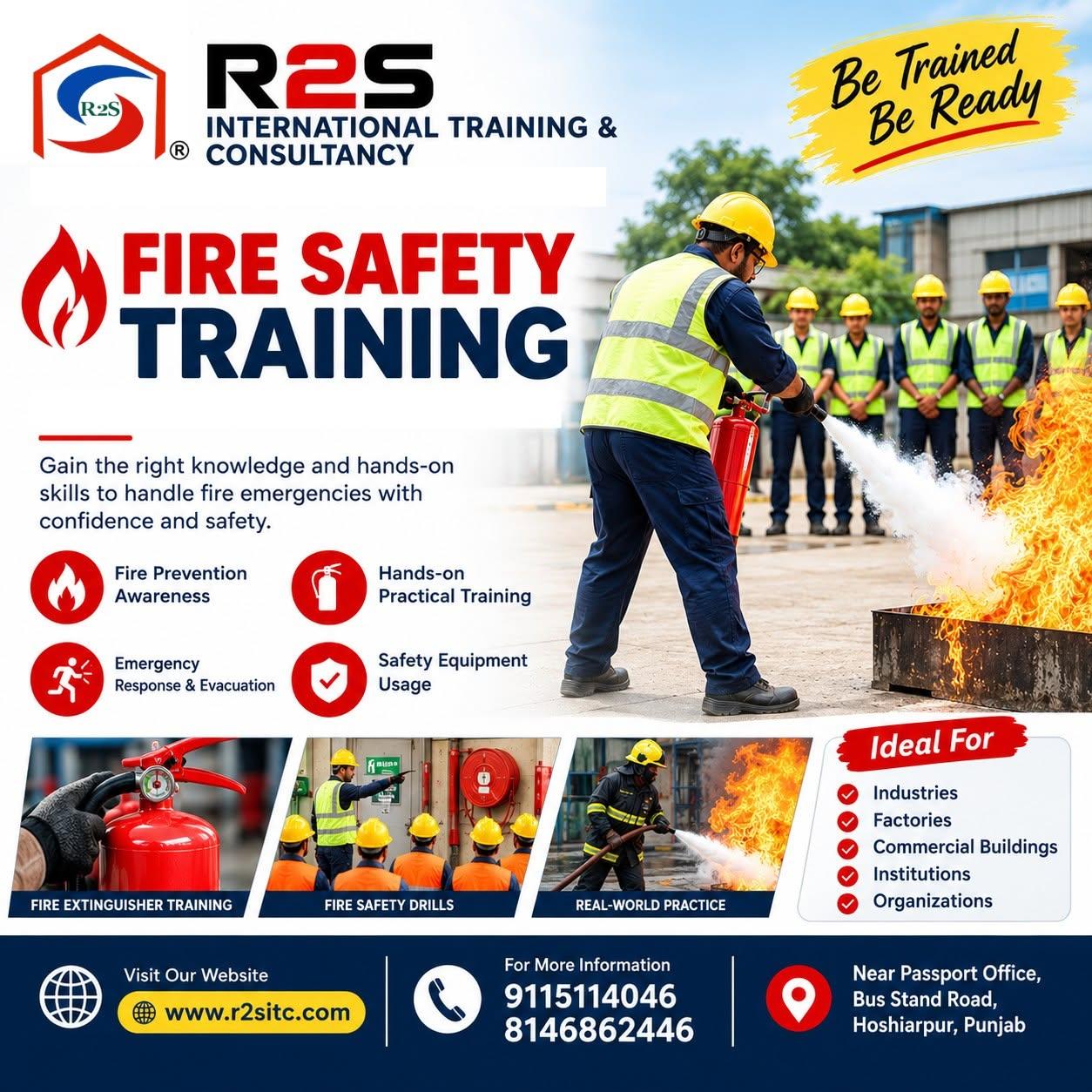
Fire safety is an essential part of protecting people, property, and workplaces. From factories and warehouses to offices, educational institutions, and construction sites, understanding how fires start and how to respond to emergencies can help reduce risks and improve workplace preparedness.
Fire Safety Training in Punjab can help students, job seekers, industrial workers, supervisors, and safety professionals develop important knowledge of fire prevention, firefighting equipment, emergency evacuation, and safe working practices.
For individuals looking to build their workplace safety knowledge, choosing a suitable training program is an important step toward understanding fire hazards and responding responsibly during emergencies.
What Is Fire Safety Training?
Fire Safety Training is a learning program designed to help people identify fire hazards, understand fire prevention measures, use appropriate fire safety equipment, and follow emergency procedures.
Depending on the course syllabus, training may include classroom instruction, equipment demonstrations, practical exercises, and emergency response awareness.
The main objective is to help participants recognize potential fire risks and understand the correct actions to take when a fire emergency occurs.
Why Is Fire Safety Training Important?
Fires can develop rapidly and create serious risks for workers, customers, visitors, and nearby communities. Poor housekeeping, electrical faults, improper storage of combustible materials, and unsafe work practices can contribute to fire hazards.
Fire safety training helps participants understand how to prevent common hazards and respond appropriately when an emergency occurs.
Key benefits include:
Better awareness of fire hazards and prevention.
Understanding the types and uses of fire extinguishers.
Improved knowledge of evacuation procedures.
Awareness of emergency alarms and reporting systems.
Safer workplace practices and housekeeping.
Better understanding of personal protective equipment and emergency responsibilities.
Training supports workplace preparedness, but it must be combined with suitable equipment, maintained fire protection systems, clear evacuation plans, and applicable safety procedures.
Types of Fire Safety Training
Fire safety training can cover different areas depending on the workplace and the learner’s responsibilities.
1. Basic Fire Safety Awareness
This introduces common fire hazards, fire prevention practices, alarm systems, evacuation routes, and the importance of reporting unsafe conditions.
2. Fire Extinguisher Training
Participants learn about different types of fire extinguishers, their intended applications, inspection awareness, and safe-use precautions. Any practical demonstration should be supervised and conducted in a controlled environment.
Important: The wrong extinguisher can make a fire more dangerous. For example, water must not be used on live electrical equipment or fires involving flammable liquids.
3. Basic Firefighting Training
Depending on the course, participants may learn basic firefighting principles, emergency communication, safe response limits, and when to evacuate instead of attempting to fight a fire.
Only trained and authorized personnel should attempt to control an incipient fire when conditions and workplace procedures permit it.
4. Emergency Evacuation and Response
This area focuses on recognizing alarms, using designated escape routes, assisting with evacuation according to workplace procedures, reporting emergencies, and reaching the designated assembly point.
5. Industrial Fire Safety
Industrial workplaces may involve flammable liquids, gases, combustible materials, hot work, electrical equipment, and specialized machinery. Training should reflect the hazards present at the particular workplace.
Common Causes of Workplace Fires
Understanding common causes of fires helps individuals and organizations identify preventive measures.
Electrical faults: Damaged wiring, overloaded circuits, and defective equipment.
Flammable materials: Unsafe storage or handling of combustible substances.
Poor housekeeping: Accumulation of combustible waste and materials.
Hot work: Welding, cutting, grinding, and other activities that generate sparks or heat.
Smoking in restricted areas: Improper disposal of smoking materials.
Unsafe equipment use: Operating or maintaining equipment without following applicable procedures.
Regular inspections, suitable fire protection equipment, employee awareness, and proper maintenance can help reduce these risks.
Who Should Enrol in Fire Safety Training?
Fire Safety Training may be beneficial for:
Students and freshers interested in workplace safety.
Job seekers exploring industrial safety careers.
Factory and warehouse workers.
Construction workers and site supervisors.
Security personnel and facility management staff.
Safety officers and HSE professionals.
Employees responsible for emergency preparedness.
The right course depends on the participant’s role, previous experience, and the safety requirements of the intended workplace.
Career Opportunities After Fire Safety Training
Fire safety knowledge can support career development in industries where fire prevention and emergency preparedness are important.
Depending on additional qualifications, practical experience, and employer requirements, relevant work areas may include:
Fire safety support.
Industrial safety operations.
Fire prevention and emergency preparedness.
Workplace safety assistance.
Facility safety and maintenance.
Health, Safety and Environment (HSE) support roles.
A short training course alone may not qualify someone for every fire safety position. Some roles require additional education, specialized certifications, practical experience, or employer-specific training.
How to Choose the Right Fire Safety Training Institute in Punjab
Before enrolling, consider these factors:
Course syllabus: Confirm which fire prevention, equipment, and emergency response topics are covered.
Practical demonstrations: Ask whether the course includes supervised demonstrations or practical exercises.
Trainer experience: Enquire about relevant industry experience and training expertise.
Safety arrangements: Check whether practical activities are conducted using suitable equipment and appropriate precautions.
Certificate details: Understand the certificate issued and whether it meets the requirements of your intended employer or role.
Course duration and fees: Confirm the schedule, total cost, and enrollment requirements before registering.
Choosing a course based on its content and suitability is more useful than relying on unsupported promises of employment or certification recognition.
Fire Safety Training in Punjab at R2SITC Hoshiarpur
R2S International Training & Consultancy (R2SITC), located in Hoshiarpur, Punjab, provides training-related services for people interested in workplace safety and practical skills development.
If you are searching for Fire Safety Training in Punjab, you can contact R2SITC to enquire about available courses, the syllabus, practical training components, course duration, and enrollment details.
Whether you are a student, job seeker, or working professional, developing fire safety awareness can help you better understand workplace hazards and the importance of emergency preparedness.
Contact R2SITC Hoshiarpur
Institute: R2S International Training & Consultancy (R2SITC)
Location: Hoshiarpur, Punjab, India
Phone: +91-8146862446
Website: https://r2sitc.com
Email: [email protected]
Contact the institute for current course information and guidance on selecting a suitable training program.
Frequently Asked Questions
1. What is Fire Safety Training?
Fire Safety Training teaches participants how to identify fire hazards, follow prevention measures, understand fire safety equipment, and respond appropriately to workplace fire emergencies.
2. Who can join Fire Safety Training in Punjab?
Students, freshers, job seekers, industrial workers, supervisors, and safety professionals may be eligible, depending on the course’s entry requirements.
3. Does fire safety training include practical sessions?
Some courses include practical demonstrations or supervised exercises involving fire extinguishers and other safety equipment. Contact the training provider to confirm what is included in the specific course.
4. Why is fire extinguisher knowledge important?
Understanding extinguisher types and their correct applications helps people recognize when equipment is appropriate and when evacuation is the safer response.
5. Can Fire Safety Training help with career development?
It can help develop relevant safety knowledge. Employment opportunities depend on the position, qualifications, practical experience, and employer requirements.
6. Where can I enquire about Fire Safety Training in Hoshiarpur?
You can contact R2SITC Hoshiarpur at +91-8146862446,
Email: [email protected]
Visit r2sitc.com for information about available training options.
Conclusion
Fire Safety Training plays an important role in developing awareness of fire prevention, emergency procedures, firefighting equipment, and workplace hazards. Understanding these areas can help individuals make safer decisions and contribute to a more prepared workplace.
If you are looking for Fire Safety Training in Punjab, contact R2SITC Hoshiarpur to enquire about available courses and find out which training option best suits your learning and career goals.